Story 4 of 54 min read
The Metro That Never Was
Adits under the cliff and a subway that was never built
250+landslides since 1797
13drainage adits
36.3km³ of water per day
Ask anyone in Odesa about the metro and they will smile. Odesa has no metro. But ask an old Fontan resident, and, lowering his voice, he will tell you it is missing only on the surface.
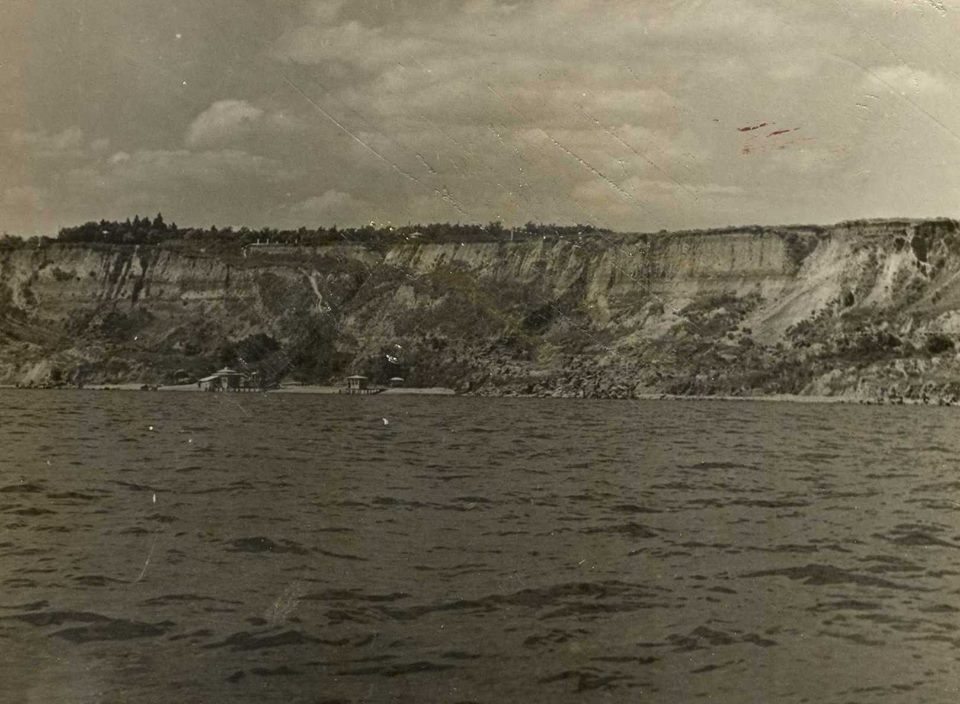
It all began with a disaster. The Fontan slopes are layers of limestone and clay, with groundwater seeping through them. The same water that gave the district its name undermined the shore for centuries, and the land, gardens and houses with it, slowly slid toward the sea. Since 1797 there have been more than 250 landslides around Odesa. In 1861 a 320-metre stretch of the plateau dropped a full twenty metres, taking with it the Langeron dacha and a funicular, and a commission advised building drainage galleries. In July 1957, after a downpour, a mass of earth some four hundred metres long collapsed, and the tram line had to be moved.
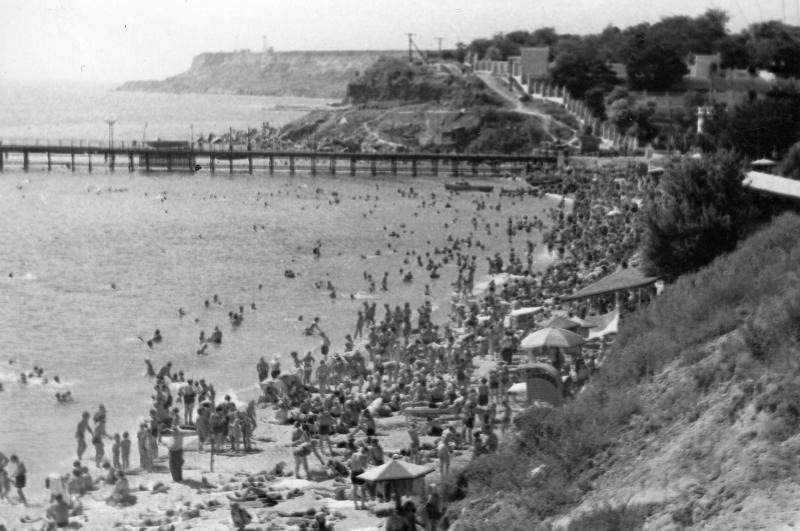
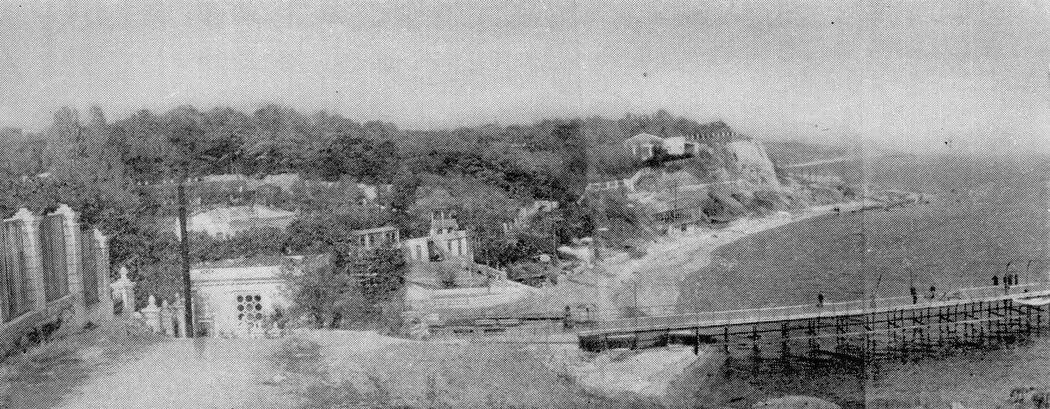
In the 1960s the city took the problem seriously. A separate anti-landslide administration was set up, headed by Igor Zelinsky, later rector of Odesa University. Along some 14 kilometres of coast from Langeron to Bolshoy Fontan, the slopes were levelled into terraces and planted with trees, breakwaters were built in the sea, and beaches on the shore. Deep underground, crews from the Kyiv metro-construction organisation, Metrobud, were at work. They dug drainage tunnels, called adits: long galleries with vertical shafts that collected groundwater and released it into the sea. Between 1965 and 1990 thirteen such adits operated on the Odesa coast, and every day they drew off, on average, more than thirty-six thousand cubic metres of water. One of the outlets comes out by the pier at Station 16. The sanatoriums and dachas that had lost up to thirty metres of land received compensation, and the shore stayed relatively quiet for more than forty years.
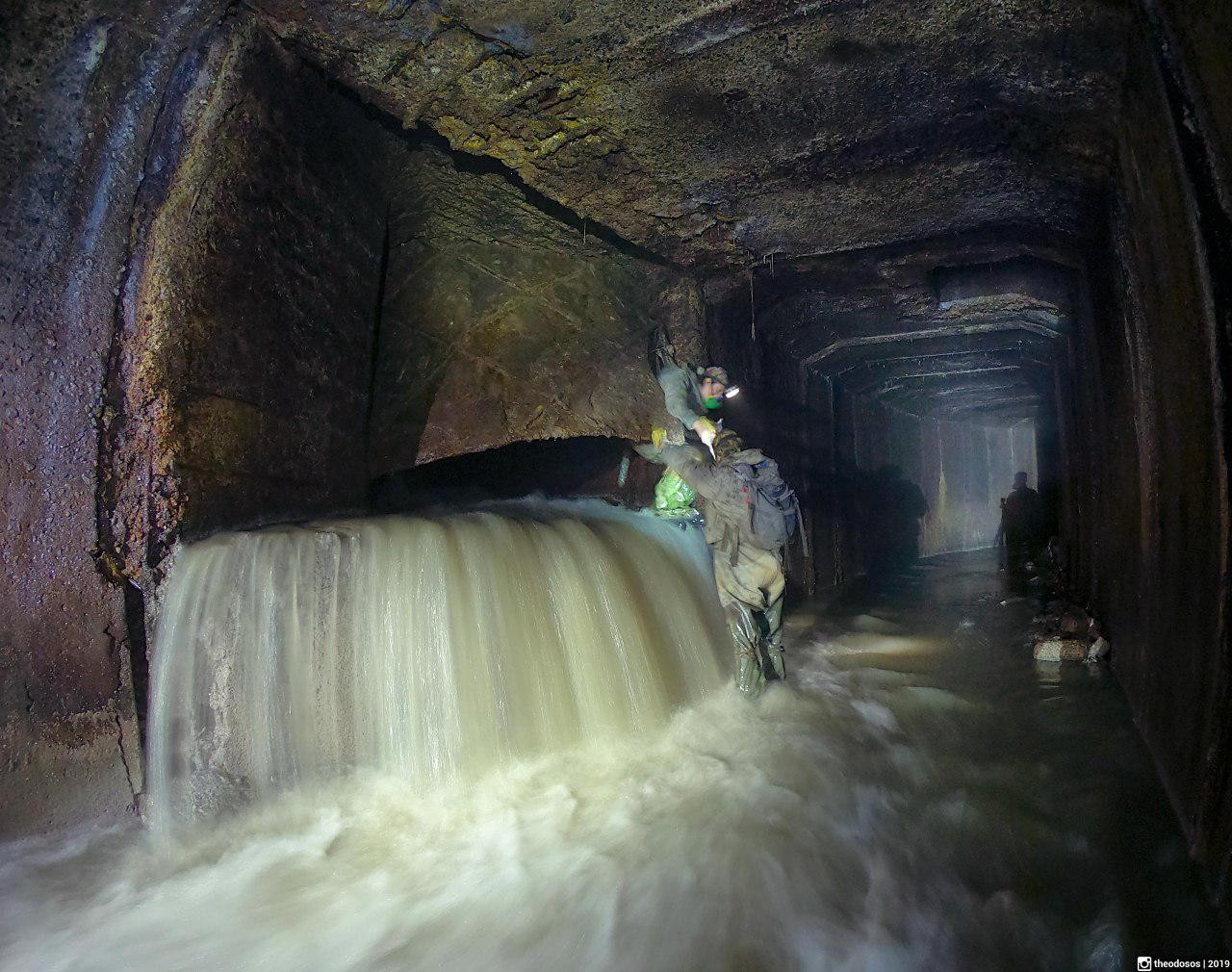
The picture shows how powerfully the water runs: tunnels like these are no place for a stroll, and it is best not to go in.
Rails were laid through the tunnels, and battery-powered electric locomotives hauling little wagons ran through their depths, carrying materials and the workers who inspected and repaired the adits. Men in metro-builders' uniforms, shafts sunk in the ground, rails, locomotives... It would be strange not to believe that a metro was being built under Fontan. Those who have been inside the adits talk of tunnels lined with cast-iron segments, like metro tunnels, and shafts about forty metres deep.
And so a legend was born: a line would run from the centre all the way to Station 16, and the tunnels for it were already built. People even say that deep underground an abandoned tunnelling shield still stands, a giant machine that gnawed its way along and froze halfway because it was too expensive to haul out. Somebody heard it from an uncle, the uncle from a neighbour, and the neighbour supposedly saw it himself.
The most interesting thing is that a real metro very nearly appeared. In the 1970s, as Odesa's population approached a million, people began to talk about it in earnest. In the mid-1980s an institute in Leningrad began designing the first line: deep, below the catacombs, from Chornomorka to Kotovsky settlement, with six stations in the first stage. The metro was already written into the 1989 master plan, and construction was due to start in 1991. But that year brought very different events. The 2007 master plan even included a branch from Bolshoy Fontan to Tyraspilske Highway, again on paper. And on 1 April 2016, on Starosinna Square, construction of the first station was ceremonially "launched", and Odesans, naturally, took it as an April Fools' joke.
In the 1990s the rails and locomotives from the drainage adits were sold for scrap. The adits themselves are still doing their job, under parks, beaches and the Health Trail. In 1998 twelve adits and the collector by the pier at Station 16 together delivered about 67 thousand cubic metres of water a day, but only a sixth of it reached the sea beyond the line of the breakwaters, because the channels on the groynes had collapsed. The recommended service life of Odesa's anti-landslide structures expired more than fifteen years ago, and the shore comes up for discussion from time to time: in 2020 residents feared that construction on the Health Trail could disturb an adit running beneath the site. Activists now count fifteen adits in the system. So when you ride tram 18 or stroll along the embankment, remember: somewhere below you runs an underground line that also ends at Fontan. It carries no passengers, but it holds up the shore you are relaxing on.
What is true, what is legend.
Confirmed
True: more than 250 landslides around Odesa since 1797; the collapse of the plateau in 1861 (320 × 30 m, the Langeron dacha and the funicular) and the collapse in July 1957 (about 400 m, the tram line moved); the Langeron–Bolshoy Fontan anti-landslide complex (about 14 km) and the administration headed by Igor Zelinsky; 13 drainage adits in 1965–1990 with an average discharge of 36.3 thousand m³ a day, the collector by the pier at Station 16; the adits were built by Metrobud, with rails and battery locomotives, the equipment scrapped in the 1990s; the 1998 figures of 67 thousand m³ a day and 16% discharged beyond the breakwaters; the 1980s metro project, the master plans of 1989 and 2007, the ceremony on 1 April 2016.
Tales and differing sources
Sources disagree: 13 adits (data for 1965–1990) or 15 (according to activists); compensation to sanatoriums, "more than 40 years of calm" and the cast-iron lining with a 40 m shaft come from the authors of publications and a blog. The place where the collector photo was taken (theodosos, 2019) is not confirmed. The year and place of the beach photo (1965, Station 16) are as given by the source. Legend: a metro to Station 16 and an abandoned tunnelling shield underground — there is no documentary confirmation.
Sources: Odessa Life: chronicles of the metro, Odessa Life: on landslides, dhyfin_halli, general_kosmosa, Culturemeter, USI, 2020.