Story 2 of 54 min read
Dachas Above the Cliff
How a steppe above the sea became a summer suburb
1892summer theatre at Station 16
40–50roubles for a room
1889the year Anna Akhmatova was born
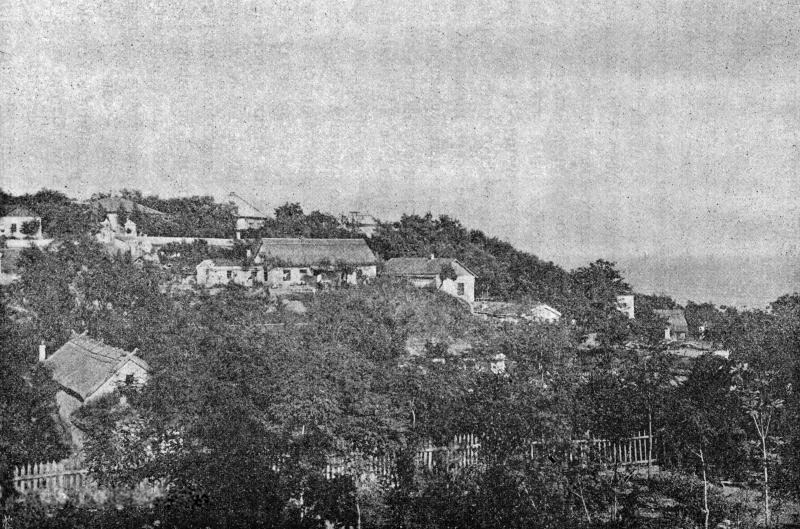
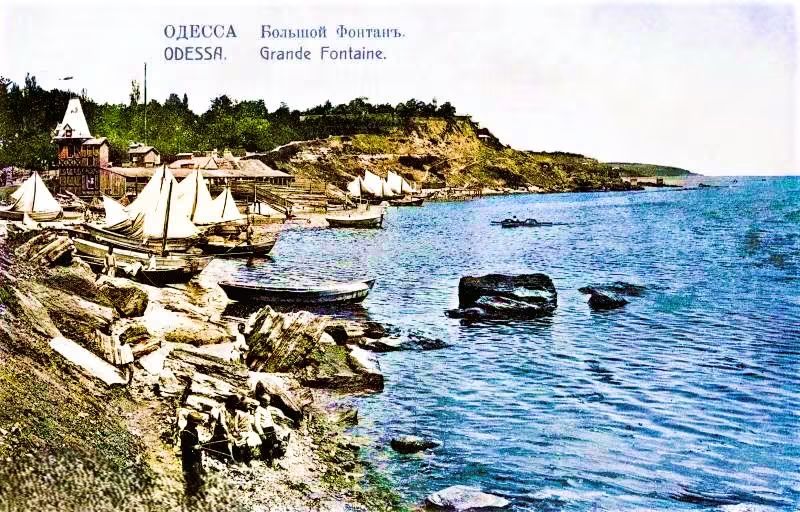
In the middle of the 19th century Bolshoy Fontan was steppe dotted with a few farmsteads around the springs. Guidebooks of the day described it as "something between a village and a summer resort". Locals let their cottages to gentlemen from the city and moved for the summer into barns and outdoor kitchens. A room for the season cost 40–50 roubles, and there was never a shortage of takers.
Then the steam tram arrived and everything changed. Land by the sea grew expensive, plots were divided and sold for dachas, and the property agents of the day, who knew their advertising as well as any today, gave them grand names: "New Switzerland", "Golden Shore". Stone houses with terraces and gazebos rose where the cottages had stood, with a view of the sea through the acacias.
Picture a dacha season in the 1890s. In May carts loaded with belongings trundle out to Fontan: trunks of linen, crockery, sometimes even a piano. The family stays until September, while the head of the household takes the train to his office each morning and comes back in the evening to the samovar on the veranda. Evenings mean strolls along the cliff edge, guests, cards and music. In 1892 a summer theatre even opened at Station 16.
In June 1889 a girl was born at Bolshoy Fontan whom the world would later know as the poet Anna Akhmatova. Writers and artists lived and worked here, and later filmmakers too.
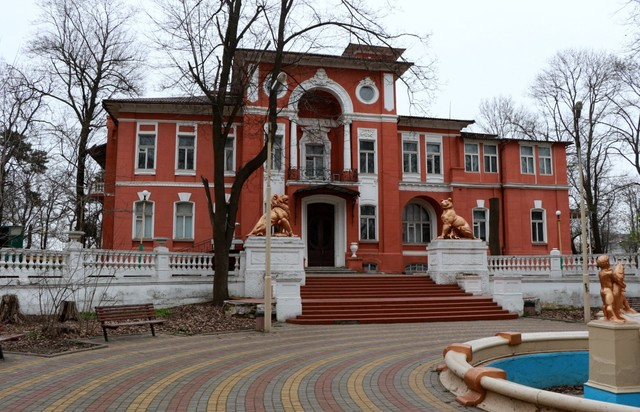
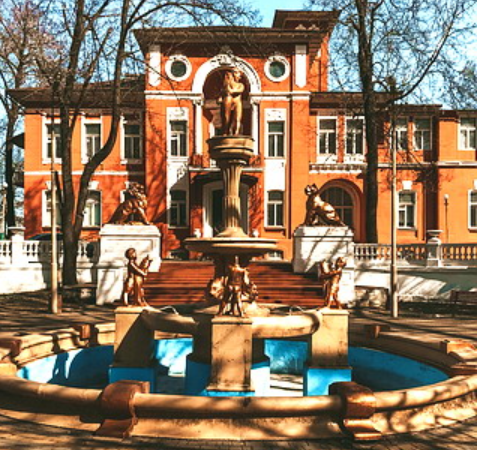
Among the dachas at Station 16 there was one you could not mistake for any other: a red two-storey house with stucco decoration, two stone lions by the steps and a fountain with figures of children. It is linked with the Brodsky family, merchants and sugar magnates whose name in pre-revolutionary Odesa was a byword for wealth. Which branch of the family owned it — the Kyiv sugar manufacturers or their Odesa relatives — local historians still argue. The Brodskys had several dachas: one is known on French Boulevard, another here, on Fontan.
A fairy tale is told about this estate, too. At the wedding of the daughter of Lazar Brodsky, the "sugar king", a winter thaw supposedly set in, and so that the newlyweds' sleigh would not have to run over bare ground, her father ordered the road strewn with sugar. Whether it really happened nobody can prove, but people love to tell it: that is just how the wedding road of a man who traded in sugar ought to look. Some sources name not the Brodskys but a Greek merchant of the Petrokokino family as the owner of this land. That is how it goes when one plot has several owners and several stories.
Under the dachas another life was hidden. Old-timers talk of an underground "stable" and wine cellars: in the heat, with no running water or refrigerators, the deep limestone cellars kept wine, provisions and ice, and a cart supposedly drove in under the vault, hence the name. The underground "stable" and the wine cellars are no invention: they really do exist. Talk of secret passages to the sea and smugglers at night belongs to the realm of legend. Do not go poking around down there: the slope here is on the move, and in 2018 the ground collapsed under the sanatorium.
Dachas were built to last. Thick walls of local shell limestone kept the coolness in the heat and the warmth in bad weather. Windowsills were marble, ceilings high, and windows placed so that the sea breeze could roam through the rooms.
After the Revolution most owners left, and the dachas took on a new life as sanatoriums, rest homes and pioneer camps. That is how the red house with the lions became the main building of the Gorky Sanatorium at 165 Fontanska Road, now a listed architectural monument. Next to it stand a white 19th-century mansion whose architect and first owner are unknown, and a Soviet-era club that once hosted dances and concerts. Old-timers add that other buildings grew out of dachas too: behind the later facades you can make out the old proportions. And in the park a drinking fountain with water from the same springs still works.
Some dachas have survived to this day simply as homes: walls half a metre thick, marble windowsills, and inside it is cool in summer without air conditioning. It was for this Fontan coolness that Odesans came here for the whole summer more than a hundred years ago. It has not gone anywhere: the shade of the trees, the sea breeze and the quiet of the evenings.
What is true, what is legend.
Confirmed
True: the guidebook quotation and the prices of 40–50 roubles for a room; the property agents' names "New Switzerland" and "Golden Shore"; the summer theatre at Station 16 (1892); Akhmatova's birth at Bolshoy Fontan (1889); the red house with lions is the main building of the Gorky Sanatorium (165 Fontanska Road), an architectural monument; the estate is linked with the Brodsky family (which branch is unknown; the family had several dachas, one of them on French Boulevard); the white 19th-century mansion and the Soviet club; the drinking fountain in the park; the underground "stable" and wine cellar exist (according to locals, not confirmed in written sources); in 2018 ground collapses were recorded on the slope under the sanatorium.
Tales and differing sources
Legends and tales: the wedding of Lazar Brodsky's daughter and the sugar on the road; the Petrokokino family as owners or neighbours; the purpose of the cellars (wine, provisions, ice), the name "stable" and the cart driving in, secret passages to the sea and smugglers; the claim that other buildings were also dachas. Fictional details: carts with a piano, the samovar on the veranda.
Sources: Wikipedia, Odessa Life, VGorode, 2020, Dumskaya, 2018, Wikimedia Commons: Brodsky dacha.