ProholodaHotel · Bolshoy Fontan
UARUEN
Book now
Story 5 of 55 min read

Golden Shore

Why the shore is golden when the sand came later than the name

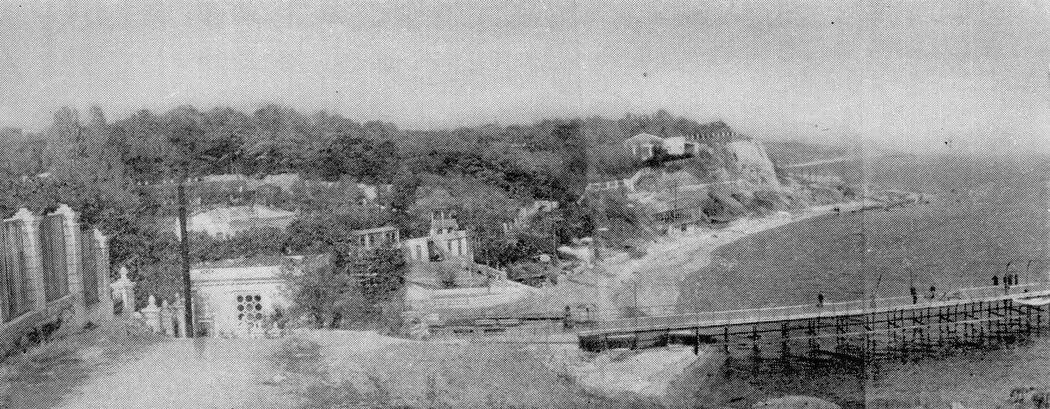
The Golden Shore beach: a wooden pier on piles, a narrow strip of sand and a cliff with buildings on top
The Golden Shore beach, 1960–1962. A wooden pier on piles and a narrow strip of sand beneath the cliff. Archive photo: PastVu (pastvu.com/p/1924387).
1960s–1980sthe sandy beaches were created
3 kmof beaches from Station 12 to 16
up to 5%of sand is lost each year

Any Odesan will tell you where the Golden Shore is: at Station 16, by the tram 18 stop. But try asking where exactly it begins and where it ends, and you will hear as many versions as you have people to ask. The place has no clear boundaries. There is only a feeling: right here Fontanska Road ends and the sea begins.

Look at the panorama from the early 1960s: the shore is still narrow, a strip of sand squeezed between the cliff and the water, a wooden pier on piles runs out into the sea, and up at the edge of the slope stand buildings. There are no terraces or breakwaters yet; all of that is still to come.

Where does the name come from? The romantics say that the fishermen who hauled their boats up onto the shore noticed that at sunset the sand glows a warm gold. Old Fontan residents add, half in jest, that the night visitors from the boats sometimes dropped real gold here. Historians give a more prosaic reason. When the steam tram came to Fontan at the end of the 19th century and land for dachas rose in price, the property agents of the day began giving the plots attractive names. That is how "New Switzerland" and "Golden Shore" appeared. The plots were built over long ago, but the advertising name has outlived them all.

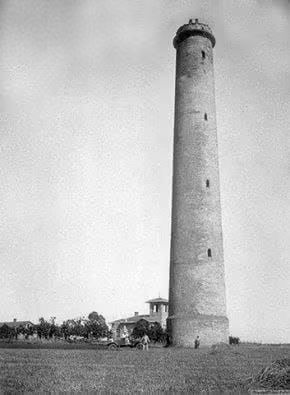
Nearby stood one more Fontan mystery: the tower at the Kovalevsky dacha. In fact it was never a lighthouse. The Taganrog merchant Timofei Kovalevsky set about building Odesa's water supply in 1849: he laid out an underground gallery to collect water from the Fontan spring, installed pumps driven by steam engines and raised a brick water tower 45 metres high, and a twelve-kilometre pipe carried the water to the city. Konstantin Paustovsky retold a different story: a lonely rich man bought a dry steppe, built a house and a round tower that looked like a lighthouse, and then threw himself off it. Local historians call that tale far from the truth, but the tower really did become a landmark: according to Paustovsky, sailors entered it in their pilot charts, and it was forbidden to pull it down. The tower was demolished only in the 1930s. Today on the site of the dacha stands 111 Dacha Kovalevskogo Street, formerly a writers' creative retreat. The local historian Sergei Matveev suggests that remains of the tower may be hidden in the thickets by its back gate, but there is no confirmation of this.

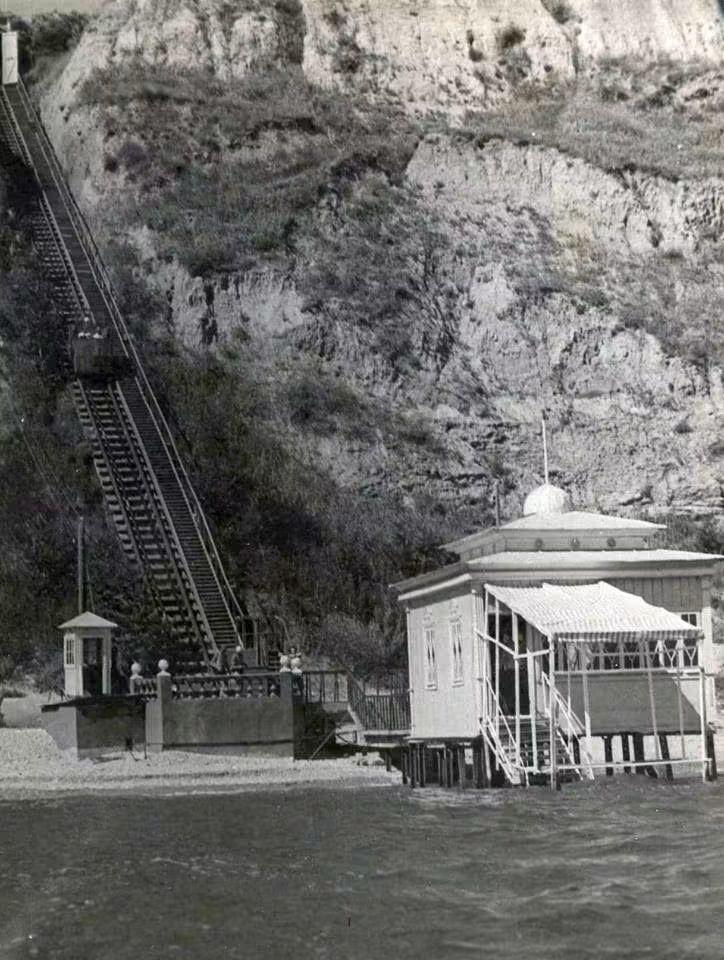
Close by, near the monastery, a funicular down to the sea was built in the 1950s for Patriarch Alexy I of Moscow and All Russia. For several decades it carried the monastery's distinguished guests down to the water. It did not survive to our day: now you can reach the sea only by the steps or by going around. In the photograph you can clearly see the rails running down the cliff and a bathing pavilion on piles at the water's edge.

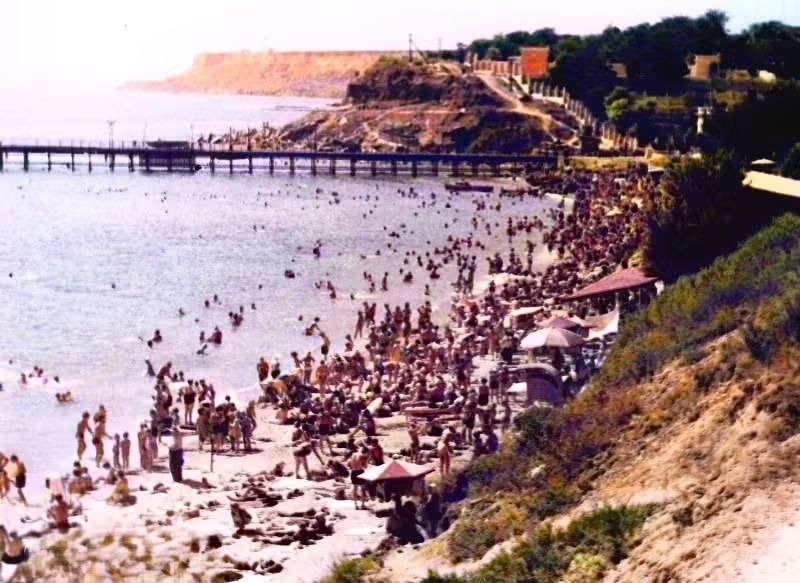
And now the most surprising part. The broad sandy beach we call the Golden Shore today is, to a large extent, made by human hands. Work began in the 1960s and went on for about twenty years: the slopes were terraced, breakwaters and groynes were built out into the sea, and the sand was pumped up from the seabed by dredgers. In the late 1970s and early 1980s the Fontan beaches enjoyed their heyday. Today the beaches of Bolshoy Fontan stretch from Station 12 to Station 16, about three kilometres of warm sand. But sand needs looking after: every year the beach loses up to five per cent of what was pumped on. To feel the difference, just compare the panorama at the start of this story with this shot from the height of the season: where a narrow strip once lay, there is now a wide beach full of swimmers.

So the golden sand really is here, it just arrived later than the name. It happens sometimes: first a dream, and then someone patiently makes it real.
station16
Any Odesan will tell you where the Golden Shore is: at Station 16, by the tram 18 stop.
A tall round brick tower in a field, beside it a two-storey house with a viewing platform and a cart
The tower at the Kovalevsky dacha. Archive photo, early 20th century.

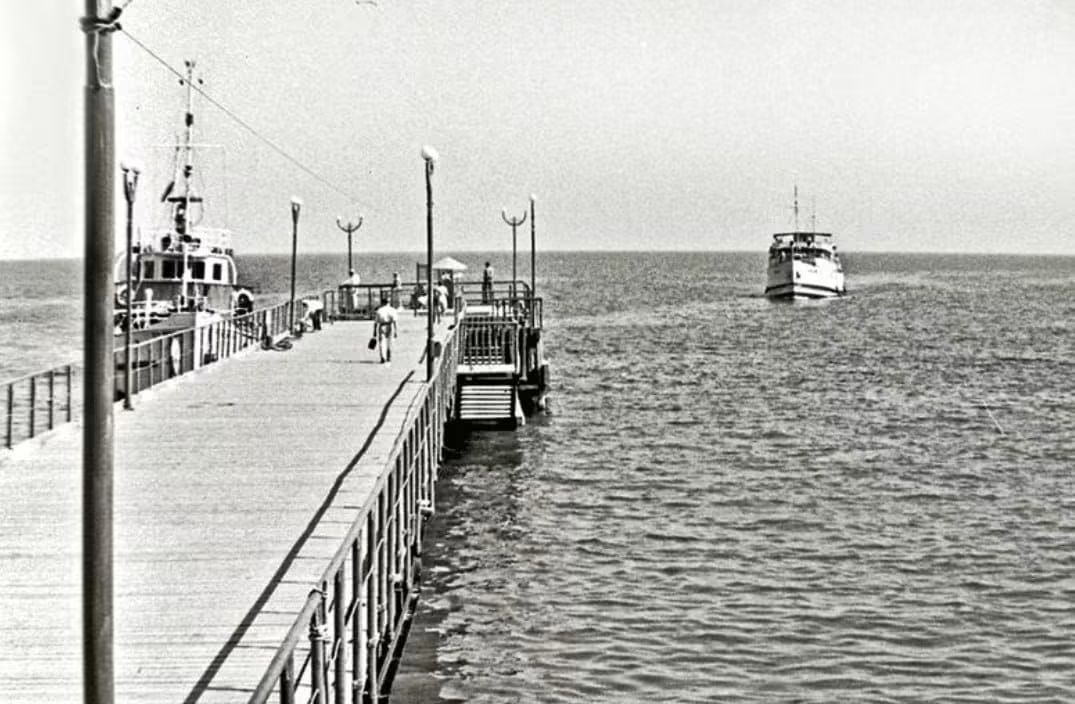
Until the mid-1990s you could even get here by sea: it was considered especially stylish to board a boat early in the morning at the Sea Terminal (Morvokzal) and reach the Golden Shore in an hour or an hour and a half. And after the reconstruction of the Station 16 embankment in the early 2010s it became one of the most pleasant places for a walk in the city.

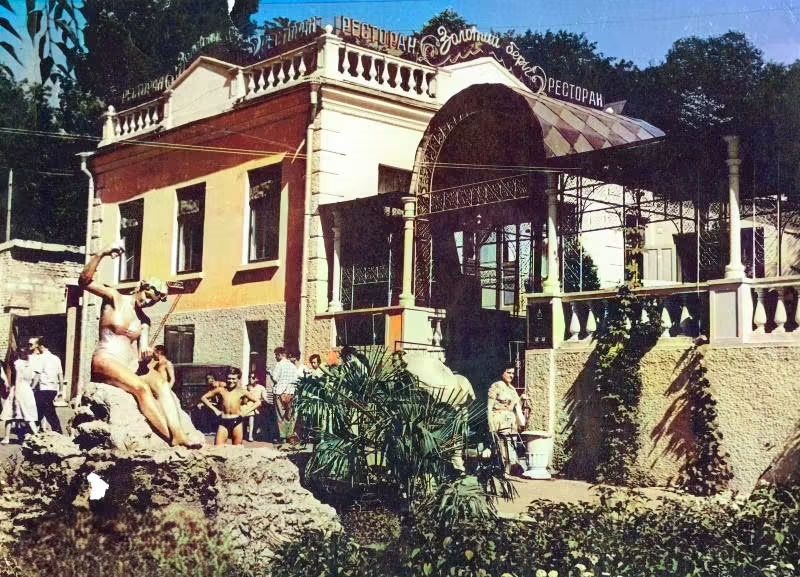
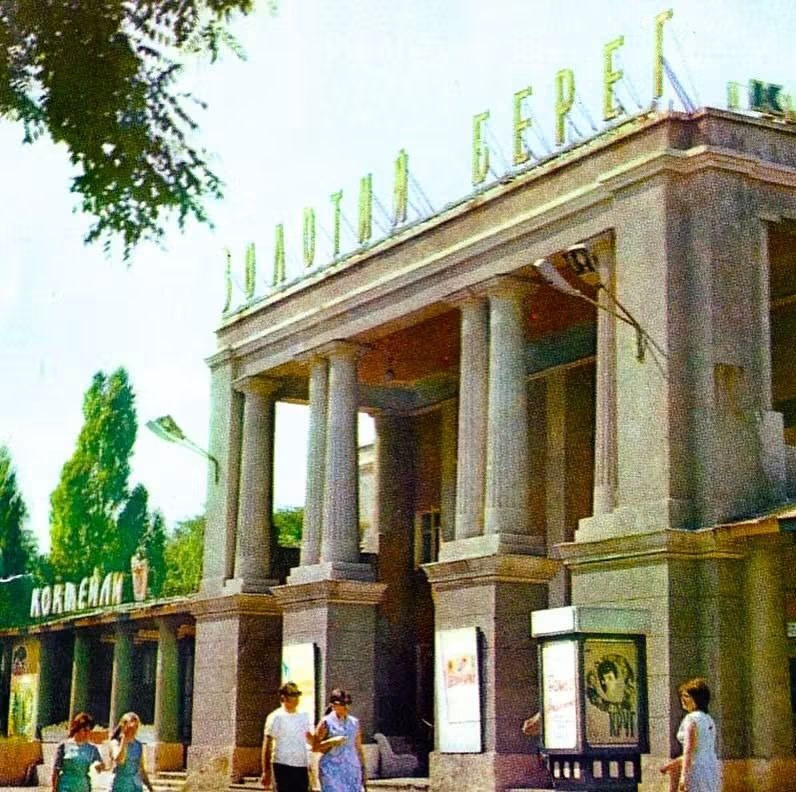
The name stuck so firmly that in Soviet times both a restaurant and a cinema at Station 16 bore it, and their signs are easy to read in old photographs: a two-storey building with a balustrade and a sculpture by the entrance, a colonnade with big letters on the roof. Filmmakers did not pass Fontan by either: according to Wikipedia, the film Peter the First was shot here in 1937–1938.

In summer it is noisy here. But the real Golden Shore reveals itself in autumn and winter. The beaches are empty, with nothing on the sand but the tracks of gulls and of dogs walking their owners. You can stroll along the Health Trail for hours, and at a café on the shore they will brew you a coffee and grill you a kebab. Out of season this shore seems to return to its earliest days: quiet, a little pensive, and very beautiful.

If you have read all five stories, you know this place better than many Odesans. All that is left is to see it with your own eyes.

From the archive

A funicular line on a steep cliff and a bathing pavilion on piles by the water
The funicular near the monastery and a bathing pavilion on piles, 1950s. Archive photo.
The Golden Shore beach in high season: swimmers on the sand and in the water, a long jetty, a headland with a red building
The Golden Shore beach in season, 1970s–1980s. Archive photo.
A wooden pier with lamp posts, a boat moored alongside and another approaching the pier on the right
The pier and pleasure boats. Archive photo.
A two-storey building with a balustrade, a glass canopy and a sculpture by the entrance; the roof sign reads "Restaurant Golden Shore"
The Golden Shore restaurant, 1960s. Archive photo.
The cinema colonnade with large letters "Golden Shore" on the roof, passers-by at the entrance
The Golden Shore cinema, 1970s. Archive photo.

What is true, what is legend.

Confirmed

True: the name "Golden Shore" arose as a property agents' name for dacha plots after the tram arrived; the sandy beaches were created anew in the 1960s–1980s by pumping sand and are protected by breakwaters, lose up to 5% of their sand each year, and the beaches from Station 12 to Station 16 run for about 3 km; a boat from the Sea Terminal until the mid-1990s; a funicular for Patriarch Alexy I in the 1950s, not preserved; Timofei Kovalevsky built Odesa's water supply from 1849, and the 45 m water tower was demolished in the 1930s (according to the local historian Sergei Matveev); 111 Dacha Kovalevskogo Street is the former writers' creative retreat; the filming of Peter the First at Fontan in 1937–1938 is according to Wikipedia.

Tales and differing sources

Legends: the "glowing sand" of the fishermen and the smugglers' gold; the death of Kovalevsky, who threw himself from the tower (a historian calls this far from the truth), and the tower as a landmark in the pilot charts, as retold by Paustovsky. Not established: the years of the photos of the restaurant (1960s), the cinema (1970s) and the beach in season (1970s–1980s), the place and year of the photo of the pier with boats, the place of the tower photo.

Sources: Odessa Life: Bolshoy Fontan, USI, leska_man, Odessa Life: Kovalevsky and the tower, Wikipedia.

From Station 16 to Proholoda

Tram 18 takes you to Station 16. Proholoda is 350 metres from the sea.

Book a room
All stories in the seriesStories of Bolshoy FontanRead on →